Showing posts with label wellness. Show all posts

Friday, January 15, 2021

More Than Just a Pose: Yoga and Physical Therapy

by Amber Yavitz,
Front Office Coordinator
Over my past two years at Lakeshore Physical Therapy, many patients have asked me for yoga class recommendations based on which teacher is the most beginner-level friendly. I’ve been learning yoga since I was nine years old and am in the process of becoming a certified yoga instructor, but for someone who has had a previous injury or hasn’t had much experience with yoga, the practice can sound understandably intimidating. Yoga - Sanskrit for “union” - uses spiritual and physical meditation, breathing and exercise techniques to improve overall health. In fact, physical therapy often uses poses originating from yoga to help people with injuries to help them build muscular strength, balance, and flexibility.

One of the most foundational components of yoga is building an awareness of breath. Yoga instructors guide practitioners through breathing techniques, which are used to help flow through each pose and movement and aid in stabilization of a pose. While  most yoga poses and breathing techniques are used for the intention of relaxation and mindfulness, physical therapy also uses breathing techniques to teach postural awareness and emphasize controlled breathing.


If you’re new to yoga, don’t be intimidated by some of the more advanced poses you may have seen! Modifications and variations are given in most yoga classes, especially for people who are not as flexible or experienced, and your physical therapist can always work with you to modify poses that fit within your restrictions. Yoga is an ongoing practice to learn your body and improve movement, and regularly practicing yoga can help with body awareness and clearing one’s mind to center attention. If you have done physical therapy before, chances are you already know more than you think - below are some poses that you may have seen or done before!


Child’s Pose

Child’s pose is a rest pose that is used in yoga to calm and ground the practitioner. Its main benefit is increasing flexibility by creating a gentle stretch for the back and hips, which is a common goal for physical therapy programs for low back and hip pain. Deep breathing in this pose can relax the body, especially after more difficult yoga sequences or exercises.


Warrior One and Two

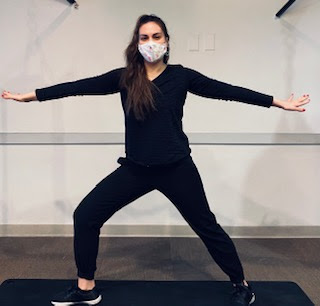
These standing poses help with balance and focus while opening the hips and chest. By utilizing longer holds, they can also help strengthen the shoulders, legs, and back. Note that the difference between these two poses is the arm position: in Warrior One arms are up, and in Warrior Two arms are opened wide to the side.
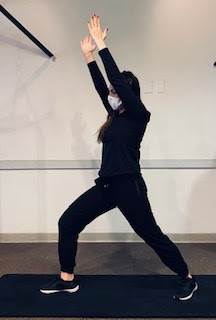

Warrior One
Warrior Two


Sphinx Pose

Sphinx pose is a softer back bend that can stabilize the shoulders and lengthen the abdomen. This is a beginner pose that can prepare the body for more advanced poses later in your practice. This allows the practitioner to keep the pressure off the back while still opening the chest. In physical therapy, Sphinx Pose can be a good way to work on gradual extension in the back until you are ready for an Upward Facing Dog pose.


Low Lunge

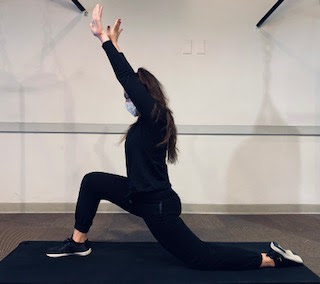
The Low Lunge is used in many yoga sequences and there are many variations for different comfort levels. This position stretches the hip flexors and quads, helping to  restore range of motion in the hips. Many people are very tight in their hips due to living a sedentary lifestyle and so may require modifications depending on how tight the muscles are.


If you are experiencing an injury, physical therapy and yoga together can work hand in hand to ensure optimal recovery. Once you have graduated from physical therapy, continuing yoga will help the body maintain strength gains, decrease stress, and prolong flexibility.


Friday, October 9, 2020

Happy National Physical Therapy Month!

by Sally Fansler, PT

Every October we celebrate National Physical Therapy Month, an annual opportunity to raise awareness about the benefits of PT. We are proud of our profession and feel grateful to be able to help people move better, achieve their goals, and live pain-free every day!


Tuesday, August 27, 2019

Getting Into a Pickle(ball)

by Sally Fansler, PT
Move over, tennis and golf – here comes pickleball! A new favorite pastime among Baby Boomers, this sport combines elements of badminton, tennis and ping-pong. In recent years, it has become popular with older adults because of the smaller court, lower net, and slower ball speed. The rules are fairly straightforward and easy to learn, so pickleball easily becomes a fun social activity. It can be played indoors or out, in singles or doubles.

Over the past decade, however, the pickleball craze is taking hold at all age levels. Teenagers often play it in their physical education classes, and it is showing up as an intramural sport on college campuses. According to the USA Pickleball Association (USAPA), the sport has seen a 650% increase in numbers over the past six years. On-site pickleball courts are now being built not only at many retirement communities, but also as part of community park districts. The equipment – wooden paddles and plastic, whiffle-type balls – is also affordable, making it accessible to be enjoyed by a wide range of people.


Here is the pickleball rule overview:
  • The serve must be underhand and below the waist—and it must be made at least one foot behind the baseline, struck diagonally crosscourt.  Only one serve attempt is allowed.
  • Only the team serving the ball is able to score points, which take place when the opposite side fails to return the ball or commits other faults, such as hitting the ball out of bounds. 
  • When the ball is served, the receiving team must let it bounce before returning, and then the serving team must let it bounce before returning, thus two bounces.
  • After the ball has bounced once in each team’s court, both teams may either volley the ball (hit the ball before it bounces) or play it off a bounce (ground stroke).
  • The two-bounce rule eliminates the serve and volley advantage and extends rallies.
  • With doubles, both players on the serving team have the opportunity to serve and score points until they commit a fault
  • Games normally go to 11 points, with the leading team needing to be 2 points ahead to win
Lakeshore Sport & Fitness in Chicago is planning an intro to pickleball class on Sundays in the fall of 2019. Please contact LPRacquet@LakeshoreSF.com for more information. The Chicago Park District is also growing their program and information on additional places to play can be found here: https://www.chicagoparkdistrict.com/taxonomy/term/2210

References:

Friday, May 3, 2019

Growing Good Body Mechanics in the Garden

by Lauren Sweeney, Office Manager
Of all the places I like to spend time in the late spring and early summer, my garden is one of my favorites. Now that we've braved our last gasp of snow in Chicago (fingers crossed!), I'm ready to uncover my raised beds, turn my compost and get my seedlings started. In all the excitement of getting to grow things, though, it can be easy to forget to be good to our best gardening tools: our bodies. We often don't realize how hard we've worked outside until we're struggling to get out of bed the next morning.

At its core, gardening is no different than any other kind of exercise: it requires movement in multiple planes of motion, and can put strain on the knees and the back. As such, a warmup prior to gardening - a quick walk around the block, some stretches - can help prevent soreness later. As you are gardening, think about how your body is feeling: have you been crouching for a while? Doing a repetitive motion? If you find you're getting sore in one position or during one activity, change your body position or take a break. It can be tempting to plant those last five tomatoes and just be done, but switching to shoveling mulch or taking a water break can give your body the change it needs to get the job done.

Two hands in brightly-patterned gloves using a trowel to plant a red and yellow flower in the dirt

As most gardening is done on the ground, knees can suffer. If you will be spending a while in a kneeling position, consider knee pads or a gardening pad to reduce pressure. If kneeling is difficult, a bucket or low chair can allow you to plant from a seated position. Gardening using raised beds can help reduce strain as well, as they do not require the gardener to get quite as low to the ground, and when shoveling or raking, be sure to keep knees soft (rather than locked).

Many gardening tasks also require a lot of our core and our backs, so it is important to be mindful of them. When moving heavy materials, such as stone or bags of mulch or soil, be sure to use proper lifting mechanics (bending from the hips, turning feet to move loads rather than twisting or lifting). If something is too difficult to lift alone, use a wheelbarrow or ask someone for help. Try not to overload shovels or trowels, and use a hose for watering instead of lugging around a watering can, especially for hanging plants.

When you are done for the day, finish up with some light stretching. And don't forget to take breaks for food and water! It is easy to misjudge the amount of work we have been doing when we are engaged in a task like gardening. If you do experience a new pain working outside, don't hesitate to stop in our office - we'd be happy to help you get back to enjoying your garden.

Resources:
https://www.moveforwardpt.com/Resources/Detail/gardening
http://www.rehab.msu.edu/wellness/garden.html 

Friday, December 7, 2018

The Home Stretch

by James Bansberg, PT
Some of the most common advice we receive when we complain about a newly discovered ache or pain is to just “stretch it out.” But what does that even mean? How long do I hold it? When should I do it? Do I just throw my leg up on a table for a couple of seconds and beg the pain to go away?

Most of what we know about stretching is either a myth or based heavily on outdated science. Worse yet, when speaking to various health professionals, their recommended duration for stretching can vary greatly, which can be confusing and sometimes discouraging for their clients. Luckily, a 2018 study by Thomas et. al has helped answer some of these questions. The study focused on most effective form of stretching for improving range of motion, as well ideal stretch duration and frequency.

Despite its vilification in recent media, the researchers found that static stretching was more effective than other forms of stretching for improving range of motion long term. This doesn’t mean that static stretching should be the only form of stretching utilized in a regular workout program, however. Other studies have discovered the benefits of other forms such as dynamic and ballistic stretching, especially prior to activity.

As for duration, there’s good news for the more impatient types: a 30-60 seconds hold was as beneficial as other, longer durations (60-120 seconds and over 120 seconds). Consistency, however, was key: the research showed stretching more than 5 times a week was more effective than 2-3. Interestingly, 7 days of stretching per week did not yield better results than 5 days, making the sweet spot between 5-7 days per week.

The final portion of the study looked at optimal time spent per week stretching to maximize mobility changes. Surprisingly, a minimum of 5 minutes was required for significant changes, with the ideal time being anywhere between 5-10 minutes.

Ultimately, some stretching is better than no stretching, and recent studies have found benefits to other forms of stretching as well as foam rolling. However, even stretching has a proper dosage, so it is important we utilize available evidence to guide our decision-making so that we are able to reap the greatest benefit. 

References: 
Thomas E., Bianco A., Paoli A., Palma A. The Relation between Stretching Typology and Stretching Duration: The Effects on Range of Motion. Int. J. Sports Med. 2018;39:243–254. doi: 10.1055/s-0044-101146.

Friday, October 12, 2018

Direct Access for Physical Therapy in Illinois!

by Lauren Sweeney, Office Manager
August 17 was a day like any other in our office: we treated patients, we answered billing questions, we scheduled future appointments for care. But it was unlike any other day in one very important regard: we no longer had to ask patients, “Do you have a prescription from your doctor?”

Up until last month, Illinois state law required patients to have a doctor’s prescription prior to seeking treatment from a licensed physical therapist. On August 16, however, Governor Bruce Rauner signed into law a bill that allows patients in the state of Illinois to have direct access to physical therapy treatment. Patients seeking physical therapy may now simply book an appointment to do so, no differently than they would with their GP or dentist.

This is hardly a revolutionary idea, either. Illinois was one of the last states in the nation to adopt the bill, which is expected to reduce the need for unnecessary X-rays, MRIs, and opioid prescriptions. According to a recent BlueCross BlueShield study, direct access to physical therapy led to a 31% reduction in total health care costs and a 90% reduction in opioid use.

Research also reveals that patients who visited a physical therapist directly for outpatient care had fewer visits, leading to lower overall costs. A study published by the Journal of Orthopedic and Sports Physical Therapy discovered that patients who decide to choose physical therapy as their first treatment option for spine management saved an average of $1543 in their overall care as compared to patients who chose the traditional medical referral route. Both groups showed similar clinical improvement in their symptoms. 

That said, the law does come with stipulations: a physical therapist must refer a patient to a health care professional if the patient does not demonstrate measurable or functional improvement after 10 visits or 15 business days, whichever occurs first. Additionally, this law does not affect Medicare patients, who are still required to have a prescription for physical therapy prior to treatment per federal law. Most patients, however, now have the ability to seek treatment that is safe, effective, non-addictive, and non-invasive for many painful conditions.

Our physical therapy community is confident that with fewer barriers, the patient can choose physical therapy as a first treatment option, leading to a speedy, safe and less expensive recovery.

Resources:
https://www.jospt.org/doi/abs/10.2519/jospt.2018.7423

Monday, July 23, 2018

Postural Restoration

by Stephanie Korso, PT
Although the human body may look symmetrical to the naked eye, the right and left sides of our body are actually asymmetrical. For example, we have a heart on the left side of our body and a liver on the right side. Our right hemi-diaphragm is larger and more domed than the one on our left, putting it in a better position to function. The left side of our brain controls the right side of our body and vice versa. Since the left side of the brain is primarily responsible for motor planning, most people are right side dominant, regardless of hand dominance. These asymmetries are balanced through integration of system imbalances. If the asymmetries are not balanced, then postural patterns can emerge. These postural patterns may then contribute to weakness, instability, and various pain syndromes. 

So…what’s a postural pattern? This is when our body gets stuck in a certain position. But we’re not just talking about bony alignment and how we look when we stand up tall or sit at our desks: we are referring to our body at any given moment in time. Posture involves coordination of multiple systems, not just the musculoskeletal system, and is constantly changing. Ideal posture involves a homeostatic state when nothing is working harder than anything else and where our overall body system can shut down. In this state of neutrality, we efficiently balance our various asymmetries. 

The Postural Restoration Institute has developed three main stages to restore optimal posture:

  1. Reposition – this involves muscle inhibition
  2. Retrain – this involves muscle facilitation
  3. Restore – this involves restoring reciprocal and alternating function
Diaphragmatic breathing is often a key component in achieving a neutral posture. When learning to optimally use your diaphragm, fully exhale, ridding yourself of all the air in your lungs. Your exhale should last longer than your inhale. Then, attempt inhaling into your right chest wall and into your back without allowing the bottom of your rib cage to flare open. This full exhale allows your diaphragm to dome into its resting position so that it can efficiently work upon inhalation. 

Think you got it? Challenge your diaphragm by blowing up a balloon! 
Nail it? Then try a common repositioning technique developed by the Postural Restoration Institute! Click on the following video for instruction.


References:

Postural Restoration Institute. www.posturalrestoration.com

Wednesday, March 7, 2018

Fighting Inflammation with Food

by Liz Cascio,
Nutrition Specialist 
In honor of National Nutrition Month, we've invited LSF nutrition specialist and personal trainer Liz Cascio to be our guest blogger.

Inflammation is the body’s automatic security system: it activates when it recognizes anything that is foreign, such as an invading microbe, plant pollen, or chemical. It can also be triggered by tissue trauma, like an ankle sprain or a scrape - the body sends white blood cells and other immune chemicals to help keep the injured area clean and promote healing. In healthy individuals, inflammation is a good thing!

However, sometimes inflammation occurs even when the body is not under threat - the body responds as if normal, healthy tissues are infected or somehow abnormal. As a result, the body's normally protective immune system can cause damage to its own tissues. Fortunately, studies have shown that the solution to chronic inflammation might just be in the produce section of your grocery store. Below you’ll find some of the most powerful inflammation-fighting compounds and the foods you can start incorporating today to reduce your risk of inflammation and other chronic diseases!

Antioxidants 
Powerful phytochemicals (or plant chemicals) – such as Vitamin C and E, lycopene, lutein, beta-carotene, and polyphenols – protect the cells from exposure to free radicals and can also inhibit resulting inflammatory reactions in the body. A good rule of thumb is to fill 2/3 of every plate with an assortment of brightly colored fruits and veggies, like leafy greens, bell peppers, citrus fruits, berries, sweet potatoes, and tomatoes. Eating this way ensures you will get all the antioxidants you need to fight inflammation while also leaving less room for the processed, nutrient-poor foods that promote it.

Omega-3 and Essential Fatty Acids
Experts recommend no more than a 4:1 ratio of Omega-6 (which increases inflammation) to Omega-3 (which decreases inflammation). To keep the right Omega-6 to Omega-3 balance, reduce or eliminate the use of vegetable oils, margarine, saturated and trans fat and choose whole plant sources of fat (avocados, nuts, seeds, and olives). Reduce or eliminate refined grains, choose grass-fed meats and wild caught fish whenever possible and load up on leafy greens and berries. For an extra boost of omega-3, skip the fish oil supplements and instead add 1-2 tablespoons of ground flax seed, chia seed, or English walnuts to get a day’s worth of Omega-3 and the added benefit of fiber and protein.

Nitric Oxide
Nitric oxide is a powerful vasodialator (or blood vessel opener), increasing blood flow throughout the body and protecting the blood vessels from oxidative stress and inflammation. Beets and leafy greens like kale, Swiss chard, arugula, and spinach, are rich in dietary nitrates and nitrite, compounds that stimulate the production of nitric oxide in the body. Other nitric oxide-promoting foods include whole grains (brown rice, quinoa, and oats) legumes (lentils, beans, and peas), citrus, watermelon, and garlic.

Alkaline Balance
Studies have shown that foods high in acid – such as proteins – may promote inflammation and force the body to work harder to maintain its optimal pH of 7.4. Avoid low carb, high animal protein diets: limit animal protein consumption to 4-ounce servings 2-3 times daily. Opt for plant-based protein sources like legumes instead of meat regularly. Choose intact whole grains and starchy vegetables (potatoes, sweet potatoes and hard winter squashes) instead of processed carbs. Fruits and vegetables (especially those that grow in the soil, like root vegetables and leafy greens) are high in minerals, making them generally high-alkaline foods.

Keep it whole, keep it healthy 
The bottom line is that the guidelines for an anti-inflammatory diet are the same as those we’ve all heard over and over again: fill your plate with brightly colored fruits and veggies and unprocessed carbs, and pass on the processed and junk foods, unhealthy fats, and too much meat. In the words of nutrition and food journalist Michael Pollan, “Eat food, not too much, mostly plants.”

For more information or personalized nutrition support, email Liz at lizc@lakeshoresf.com.