Wednesday, April 6, 2022

Running: All You Knee-d to Know

by Kate Marconi, PT
Running is one of the most popular forms of exercise in the United States, with over 60 million people participating in some way. Each year the number of running events, from 5Ks to marathons, increases due to popularity. The majority of people begin running to improve their health, but many runners have also been told that they’re ruining their knees or that they should stop when they get older to avoid arthritis.  

So will running ruin your knees? A study by Lo et al. (2018) looked into just that, following individuals over the age of 50 with current osteoarthritis in their knees. Their findings were clear: through over 48 months of regular running, none of the individuals had worsening osteoarthritis, increased knee pain, or new onset of knee pain.

Here's what we do know about injury prevention in running:

  • There is a significant correlation between glute medius weakness and knee pain in runners (Wilson et al. 2011) (Dierks et al. 2008)
  • Running 1-3 times per week with cross training has less incidence of injury and an equal cardiovascular benefit as those that run 5 times per week (Yeung et al. 2001)  
  • Stretching and proper shoes had less of an effect on injury prevention compared to strengthening and adjustment of training schedule (Yeung et al. 2001) 

Whether you’re a new or seasoned runner, you should be doing regular strengthening exercises for your glute medius. But where to start? Stastny et al (2016) looked into hundreds of exercises and measured which had the most glute medius activity that would be most beneficial for runners. Below are a few to start with:

Side plank with hip abduction: Position yourself in a side plank with your elbow under your shoulder. Feet can be stacked, one in front of the other, or bottom knee can be bent on the ground for support. Take the top leg and keeping your toes forward, raise it keeping it in line with your bottom leg. Don’t let the top leg come forward and work on keeping your hips slightly forward.


Clamshell with foot elevation: Lay on your side with your knees bent to about 45 degrees. Roll your hip forward, then keeping your feet together raise both feet. Then lift your knees open and closed, keep your feet raised and your hip forward. Add a band above your knees for a challenge!


Single leg squat: Standing on the edge of a step, sit back into your heel and complete a squat by moving your hips back. Your knee should stay in line with your ankle. Tap the floor with your heel and return up focusing on keeping your weight in your heel.


Contralateral lunge: Holding a weight in the opposite hand, step forward into a lunge. Make sure you keep your knee above your ankle. Push off your heel to return back to standing.

If you’re a new runner getting started or a runner with knee pain and you’re unsure of where to start, you can always ask a physical therapist! Our therapists are always happy to offer their expert opinions to help you continue your running journey.


 Bibliography  

Dierks, Tracy A. “Proximal and Distal Influences on Hip and Knee Kinematics in Runners with Patellofemoral Pain during a Prolonged Run.” Journal of Orthopaedic & Sports Physical Therapy, vol. 38, no. 8, 2008, pp. 448–56. 

Lo, Grace H., et al. “Running Does Not Increase Symptoms or Structural Progression in People with Knee Osteoarthritis: Data from the Osteoarthritis Initiative.” Clinical Rheumatology, vol. 37, no. 9, Sept. 2018, pp. 2497–504. DOI.org (Crossref), https://doi.org/10.1007/s10067-018-4121-3. 

St
astny, Petr, et al. “Strengthening the Gluteus Medius Using Various Bodyweight and Resistance Exercises.”
Strength & Conditioning Journal, vol. 38, no. 3, June 2016, pp. 91–101. DOI.org (Crossref), https://doi.org/10.1519/SSC.0000000000000221. 

Willson, John D., et al. “Gluteal Muscle Activation during Running in Females with and without Patellofemoral Pain Syndrome.” Clinical Biomechanics, vol. 26, no. 7, Aug. 2011, pp. 735–40. ScienceDirect, https://doi.org/10.1016/j.clinbiomech.2011.02.012. 

Yeung, E. W. “A Systematic Review of Interventions to Prevent Lower Limb Soft Tissue Running Injuries.” British Journal of Sports Medicine, vol. 35, no. 6, Dec. 2001, pp. 383–89. DOI.org (Crossref), https://doi.org/10.1136/bjsm.35.6.383.


Friday, January 14, 2022

We Turned 10!

by Sally Fansler PT

Is there anything more gratifying than knowing you’ve made a difference in someone else’s life? Honestly, we can’t think of anything, which is good news because it confirms we’re still in the right industry!


For the past 10 years, the staff at Lakeshore Physical Therapy has strived to provide one-on-one physical therapy care to our patients with a unique individualized approach. What we discovered was that this business model was equally positive for our patients and for us. With extra treatment time in each visit, successful communication and listening fosters a solid base to build on for our care.

Lakeshore PT is thankful to the Chicago community for 10 years of doing what we love to do!


Wednesday, October 20, 2021

What is the Pelvic Floor?

by Meg Crowley, PT

If you feel you've seen more and more articles referencing the pelvic floor, you're not imagining it - this group of muscles has been talked about recently on everything from local news stations to Buzzfeed. But you may have wondered: what exactly does the pelvic floor do? What does it look like? Why is it so important?

The pelvic floor is a bowl-shaped group of muscles located at the base of your pelvis (hip bones). These muscles have 5 main functions:

  • To help support internal organs 
  • To control bowel and bladder function
  • To aid in sexual function and pleasure 
  • To provide stability to trunk and low back 
  • To help with circulation of blood and fluid from lower legs back to torso 

As you can see, these muscles are in charge of making sure a lot of everyday function continues smoothly! Like any other group of muscles, however, the pelvic floor can be weak, overly tight, or a combination of both. This can create a variety of symptoms, of which these are some of the most common:

  • Leaking of urine or stool
  • Sensation of heaviness while doing higher level activities such as jumping or squatting
  • Pain with sex
  • Frequent urination (>6-8 times per day)
  • Chronic pain in hips or low back that has not been attributed to something else

Physical therapy can help with the above-noted symptoms and many others. Therapists must undergo advanced training in order to effectively assess and treat this area of the body. In an evaluation, the therapist looks at how the patient moves and breathes and assesses the patient's strength, mobility and balance. If necessary - and with the patient’s consent - there may also be an internal assessment component in order to better assess the strength, coordination, endurance and mobility of the pelvic floor. This is something your therapist will discuss thoroughly with you beforehand and you both should decide together if this is the best option for you and your case. 

Though some of these issues may feel taboo to discuss, if you are experiencing symptoms of pelvic floor dysfunction, you are not alone in this! Please reach out if you have any questions, or if you are experiencing any of the symptoms noted above.

Friday, July 2, 2021

Getting into Gear for Cycling

by Lauren Sweeney, Office Manager
Whether you do it for recreation or for transportation – or both – cycling is a low-impact exercise that can be as fun as it is beneficial. I realize that as someone who bikes a minimum of 72 miles per week I might be biased, but the science backs me up: according to several studies, commuting via bike for at least 30 minutes, 5 days per week, reduces the number of sick days employees take. Studies have also linked cycling with decreased likelihood in death from cancer and cardiovascular disease. And there’s no wrong time to start: a study in the Journal of the American Heart Association followed two groups of commuters in their 40s – one who began cycling to work and one who continued to use passive modes of transportation – and found that, after 10 years, the cyclists had lower incidence of hypertension and hyperglycemia than did their bus- and train-bound counterparts.

However, all those health benefits don’t mean much if you injure yourself on the road! Here are some great stretches to keep those cycling muscles in top condition.

Shoulder External Rotation with Band: Hold elbows at your side, squeeze your shoulder blades together. Keeping that position slowly rotate hands out from each other. Should feel back of shoulders (rotator cuff muscles) and muscles between shoulder blades (middle trapezius and rhomboid muscles) working.


Standing Quad Stretch:
Standing up tall and squeezing shoulder blades back, pull ankle toward back of hip. Should feel stretch on front of thigh (quadriceps muscle).


Doorway Pec Stretch: Standing up stall, squeeze shoulder blades back, put one foot in front
of the other and slowly lean forward until a stretch is felt in front of shoulders (pectoralis muscle).

The pec and quad stretches will help offset the crouched cycling body position, and the shoulder external rotation with band promotes keeping the shoulder blades back for optimal positioning.


 Some other tips:

  • Make sure your grip on the handlebars is firm but relaxed. Change hand positions often and remember to keep your wrists straight. 
  • Keep elbows slightly flexed to reduce shoulder strain. 
  • Make sure your seat is properly adjusted to reduce knee strain. Most cycling shops offer custom fittings and can help you find the right height.

If you have other concerns about your body before you start cycling, you can always ask a physical therapist! Our therapists are always happy to offer their expert opinions to ensure that your ride is smooth and pain-free.

 References:

Ingrid J M Hendriksen, Monique Simons, Francisca Galindo Garre, Vincent H Hildebrandt. The association between commuter cycling and sickness absence. Prev Med. 2010 Aug;51(2):132-5.

Anders Grøntved, Robert W. Koivula, Ingegerd Johansson, et al. Bicycling to Work and Primordial Prevention of Cardiovascular Risk: A Cohort Study Among Swedish Men and Women. Journal of the American Heart Association. 31 October 2016; 5:e004413

Monday, April 5, 2021

When Can Physical Therapy Prevent Surgery?

by Sally Fansler, PT
While more than 1.5 million orthopedic surgeries are performed in the U.S. each year, current research is showing that surgery might not be needed as often as previously thought. According to a recent review an estimated 10% to 20% of surgeries might not be necessary and in some specialties - such orthopedics - that number could be higher. One of the most common reasons for unnecessary surgery is that conservative options simply are not tried first. For musculoskeletal problems like joint pain, sprains, and strains, seeing a physical therapist before a surgeon can help keep patients out of the operating room and get them back to their daily lives sooner. Studies have shown that physical therapy is just as good - if not better - than surgery for a multitude of conditions, and it carries far less risk. We've compiled some research here as to the benefits of seeking physical therapy first for common orthopedic problems. 

Rotator Cuff Tears 

The rotator cuff is a group of muscles and tendons that surround the shoulder joint and provide strength and stability. When one of the rotator cuff muscles is frayed or damaged, it is considered a partial tear, whereas a complete tear is more severe and can actually pull the tendon from the attachment on the bone. Tears happen over time from normal wear and tear, or they can happen traumatically with a fall or strain. 

Small- to medium-sized tears typically respond quite well to physical therapy. A 2016 review of medical literature noted that conservative PT treatment for rotator cuff tears is effective in 73-80% of patients. While this efficacy rate depends on the age and medical history of the patient, the location of the tear, and the severity of the tear, more often than not surgery can be avoided (though in the case of a massive rotator cuff tear or a retracted tendon, the positive response to physical therapy may be reduced).

Meniscal Tears 

One of the most common knee injuries, meniscal tears are typically caused by an activity that twists the knee, and often occur when underlying osteoarthritis is present. An estimated 460,000 patients in the United States get surgery each year to fix tears in this C-shaped piece of cartilage, which acts like a cushion for the knee joint. 

Researchers are currently studying the effectiveness of surgery versus physical therapy in those patients with meniscal tears and knee arthritis. In a study of 351 patients who were 45 years and older with meniscal tears and osteoarthritis, half received physical therapy while the other half underwent surgery. The research did not find any significant differences after 6 months in those who received physical therapy alone and those who had surgery. Additionally, a 2017 literature review found that arthroscopic surgery for degenerative knee disease (including arthritis and meniscal tears) did not give lasting pain relief or improved function. Often, physical therapy is the optimal place to start to address this common knee injury.

Low Back Pain 

One type of back pain, called spinal stenosis, is a degenerative disease that causes narrowing of the space in the spinal canal. This narrowing creates pressure on spinal nerves and can become increasingly painful. Spinal stenosis is sometimes treated with surgery, but physical therapy often works just as well and comes with fewer unwanted complications than surgery, according to a study published in Annals of Internal Medicine in 2015. 

 Degenerative disk disease is also a common cause of back pain and has been studied extensively. Disk patients are sometimes treated with a surgical spinal fusion. However, a 2013 study found no major difference in outcomes between patients who had surgery for degenerative disk disease and those who chose physical therapy instead. 

Physical therapy can't fix every problem, and for some patients, surgery really is the best choice. However, the research continues to demonstrate that surgery is not a cure-all, and in fact is sometimes a very expensive and risky placebo. In many cases, physical therapy is the place to start - and for some, it's the only treatment necessary. 


References: 

Peter Edwards, Allan Wang. "Exercise Rehabilitation in the Non-Operative Management of Rotator Cuff Tears: A Review of the Literature". Pubmed Central (PMC), 2021.

"Surgery Versus Physical Therapy For A Meniscal Tear And Osteoarthritis". Vol 369, no. 7, 2013, pp. 683-683. Massachusetts Medical Society, doi:10.1056/nejmx130035. 

Siemieniuk, Reed A C et al. "Arthroscopic Surgery For Degenerative Knee Arthritis And Meniscal Tears: A Clinical Practice Guideline". BMJ, 2017, p. j1982. BMJ, doi:10.1136/bmj.j1982. 

Kuhn, John E. et al. "Effectiveness Of Physical Therapy In Treating Atraumatic Full-Thickness Rotator Cuff Tears: A Multicenter Prospective Cohort Study". Journal Of Shoulder And Elbow Surgery, vol 22, no. 10, 2013, pp. 1371-1379. Elsevier BV, doi:10.1016/j.jse.2013.01.026. 

Barrer, Steven J. "Surgery Versus Nonsurgical Treatment Of Lumbar Spinal Stenosis". Annals Of Internal Medicine, vol 163, no. 5, 2015, p. 396. American College Of Physicians, doi:10.7326/l15-5129.

Friday, January 15, 2021

More Than Just a Pose: Yoga and Physical Therapy

by Amber Yavitz,
Front Office Coordinator
Over my past two years at Lakeshore Physical Therapy, many patients have asked me for yoga class recommendations based on which teacher is the most beginner-level friendly. I’ve been learning yoga since I was nine years old and am in the process of becoming a certified yoga instructor, but for someone who has had a previous injury or hasn’t had much experience with yoga, the practice can sound understandably intimidating. Yoga - Sanskrit for “union” - uses spiritual and physical meditation, breathing and exercise techniques to improve overall health. In fact, physical therapy often uses poses originating from yoga to help people with injuries to help them build muscular strength, balance, and flexibility.

One of the most foundational components of yoga is building an awareness of breath. Yoga instructors guide practitioners through breathing techniques, which are used to help flow through each pose and movement and aid in stabilization of a pose. While  most yoga poses and breathing techniques are used for the intention of relaxation and mindfulness, physical therapy also uses breathing techniques to teach postural awareness and emphasize controlled breathing.


If you’re new to yoga, don’t be intimidated by some of the more advanced poses you may have seen! Modifications and variations are given in most yoga classes, especially for people who are not as flexible or experienced, and your physical therapist can always work with you to modify poses that fit within your restrictions. Yoga is an ongoing practice to learn your body and improve movement, and regularly practicing yoga can help with body awareness and clearing one’s mind to center attention. If you have done physical therapy before, chances are you already know more than you think - below are some poses that you may have seen or done before!


Child’s Pose

Child’s pose is a rest pose that is used in yoga to calm and ground the practitioner. Its main benefit is increasing flexibility by creating a gentle stretch for the back and hips, which is a common goal for physical therapy programs for low back and hip pain. Deep breathing in this pose can relax the body, especially after more difficult yoga sequences or exercises.


Warrior One and Two

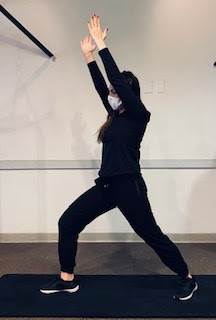
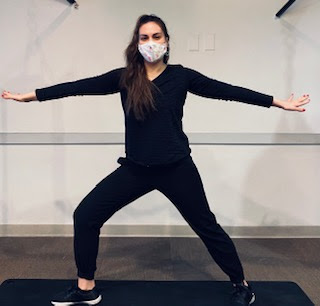
These standing poses help with balance and focus while opening the hips and chest. By utilizing longer holds, they can also help strengthen the shoulders, legs, and back. Note that the difference between these two poses is the arm position: in Warrior One arms are up, and in Warrior Two arms are opened wide to the side.


Warrior One
Warrior Two


Sphinx Pose

Sphinx pose is a softer back bend that can stabilize the shoulders and lengthen the abdomen. This is a beginner pose that can prepare the body for more advanced poses later in your practice. This allows the practitioner to keep the pressure off the back while still opening the chest. In physical therapy, Sphinx Pose can be a good way to work on gradual extension in the back until you are ready for an Upward Facing Dog pose.


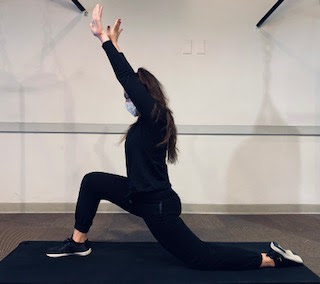
Low Lunge

The Low Lunge is used in many yoga sequences and there are many variations for different comfort levels. This position stretches the hip flexors and quads, helping to  restore range of motion in the hips. Many people are very tight in their hips due to living a sedentary lifestyle and so may require modifications depending on how tight the muscles are.


If you are experiencing an injury, physical therapy and yoga together can work hand in hand to ensure optimal recovery. Once you have graduated from physical therapy, continuing yoga will help the body maintain strength gains, decrease stress, and prolong flexibility.


Friday, December 11, 2020

A Thank You to the Patients at Lakeshore Physical Therapy

by Julia Glick, PT
As we usher in December and begin to reflect on this unusual and tumultuous year, it is important to identify the facets of our lives that give us meaning. For me, the ability to continue our work as physical therapists has been the fundamental through-line of 2020. During a time with many unknowns we have been able to come to work every day and do what we know how to do best: help patients. The patients at Lakeshore Physical Therapy allow us this privilege, and for that I am eternally grateful.

Even when we are not living in a pandemic, I love my job. I get to have uplifting interactions with people daily and see them improve, progress, and transform! I still get excited each time a post-operative patient starts to walk without a limp, or to see the delight in a patient's eyes as they announce that they could go down the stairs without pain for the first time. Of course the body is full of surprises and not every patient visit is one of drastic improvement, but I am able to end each day having made a positive impact on someone’s life or having been inspired by the wonderful patients at Lakeshore Physical Therapy. 


Not only do I get to apply my passion for anatomy and biomechanics and further my understanding of the uniqueness of each body, I get to learn about our patients as they allow us to become a part of their lives, some over many years. We celebrate important milestones together - engagements, new houses, births of children and grandchildren, and most recently, the adoption of many puppies. The mutual trust and genuine regard we share with our patients extends into our lives as well: as I planned and celebrated my own wedding this year, many of our patients were eager to hear updates, and it was lovely to be able to share photos and stories with them.


While this year has been difficult and isolating at times, the patients who have allowed me to participate in their care have given me joy and purpose. And as we turn to brave the uncharted year ahead, I am happy as I look forward to the continued opportunity to partner with our patients for a healthy new year. 


Thank you to everyone who lets us do what we love – especially all of our patients!